Showing posts with label Systems. Show all posts

Saturday Activities


The discussion on why children should get two months holidays in summer, led to the fact that some wanted to learn skills in one month and have a holiday for one month. The children were promised that they would be taught whatever they wanted to learn through Saturday Clubs.
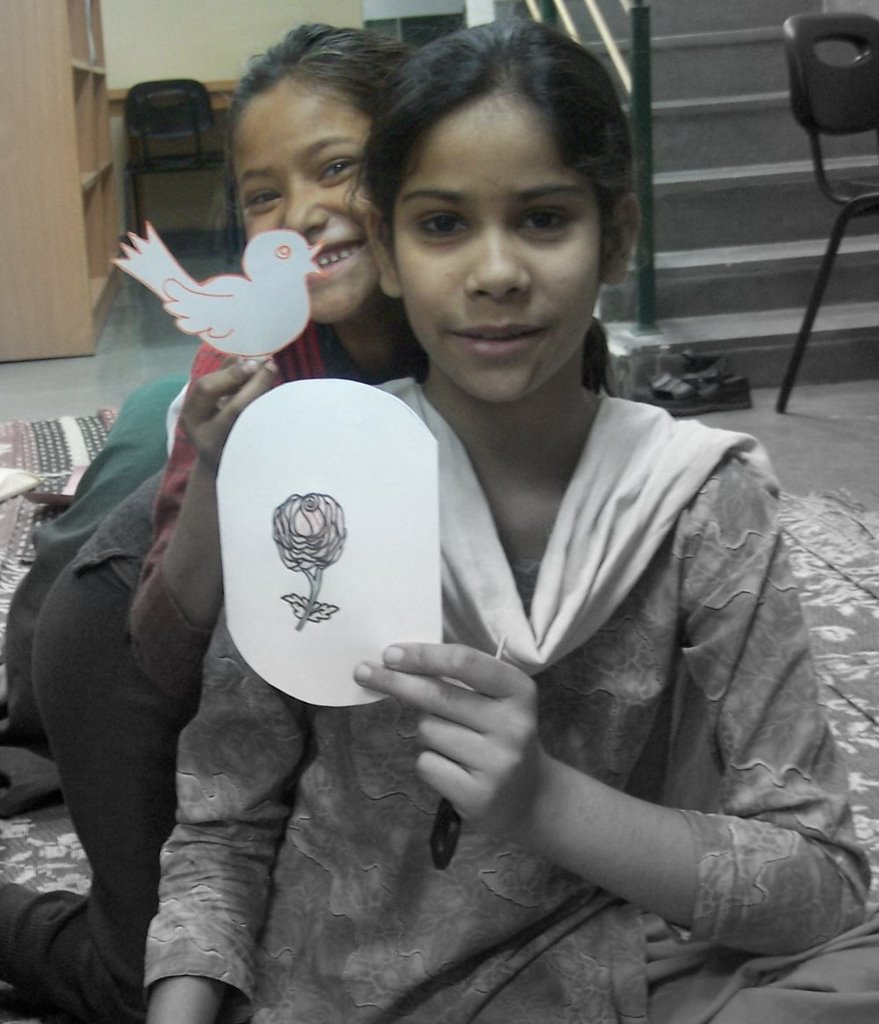
This is an opportunity to give the children pre-vocational education, so that they have some ideas on choosing their source of livelihood and skill, as they grow older. It will I hope also increase the attendance as parents see that children are also getting skills that are traditionally thought fit for the woman. Thus Henna designing, a beautician’s course, basic sewing and embroidery will be added to the existing music, yoga and art classes on Saturday.

Co-educational school

It has taken a generation of the time and resourceful effort by members of the Hope team to ensure that the education for girl children in the basti is more the norm than the exception. Standing on the shoulders of this achievement, we are now happy to announce that girls and boys have chosen to attend classes without focusing on the segregation but on the availability of a high-quality learning- environment. Classes in school have thus been divided into Morning and Evening shifts wherein the same services are available in both shifts. The provision for girls in purdah to sit in segregated classrooms continues to be an option. Work on implementing this change began last quarter. Students are increasingly making decisions based on career plans rather than the availability of segregated classrooms.

Safe House


This is a new program that has been started at the school wherein students who choose to be occupied instead of roaming the streets meet in the afternoons between schools to engage in activities of their choice.
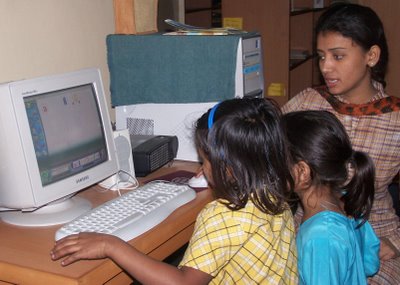
A volunteer taught the students of P2 the basics about the computer. They learnt enough about the computer to be able to open and close the machine and files without too much destruction. He was able to excite them enough about the machine for them to pledge to continue their visits to the school to work on the machine, as they were when he was teaching. They have thus become the first batch of students who are learning about content of a higher class through videos of classes/presentations/learning processes featuring their seniors. For the first time children will learn using material created by other children.

Supplementary Nutrition


The supplementary nutrition program was evaluated internally. On the basis of results, it became clear that there were many students who needed to access the supplementary nutrition service and were not being able to because of a lapse or an inadequacy in systems.

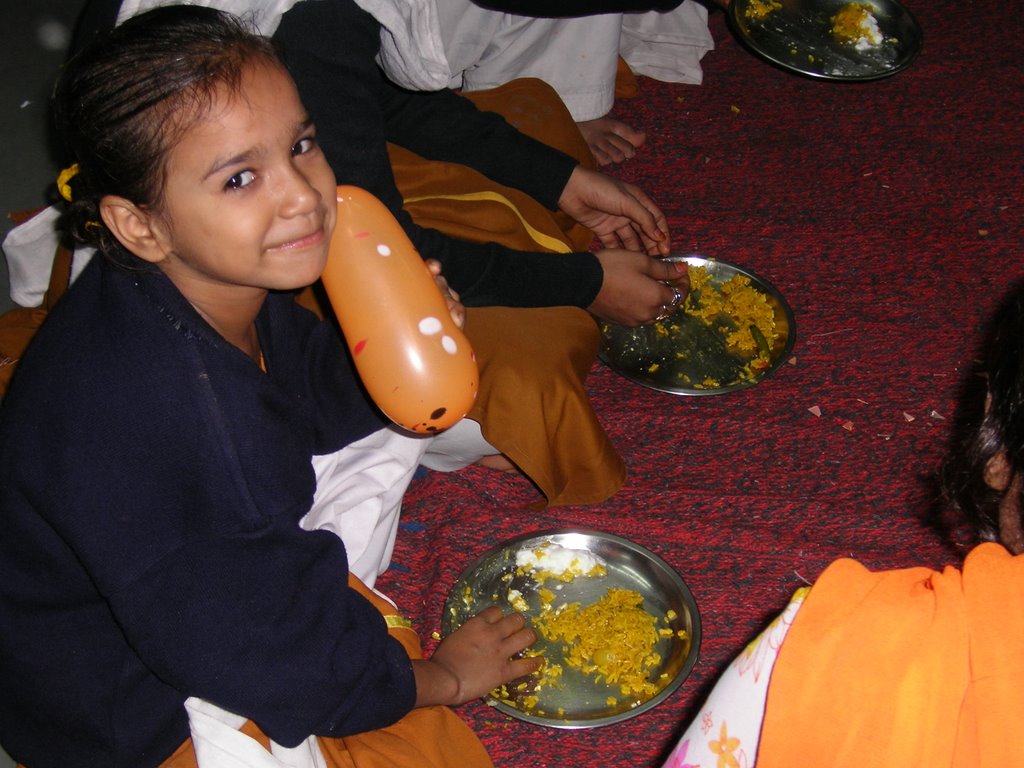
In Phase I, each student was asked to declare show that they had carried lunch or were going to be sent lunch later. Those who had neither arrangement were provided lunch at school. Those who could contribute were asked to pay Rs.2/- for the meal. In addition there was a list of students (including students sponsored by Room to Read) who are on a comparatively permanent list of children who are hosted regularly by the Project. These are children whose Individual Education Plans/Student Profiles are marked by the Community Outreach Department at the time of admission after considering the context of the child. The Community Outreach team then continues to work with and monitor the family to ensure that the child ultimately gets off this list.

The most important part of Phase I was to create the confidence in the children that the school was interested in making sure that they were well fed and content, and that all systems were being created to serve only that one purpose. The students first Rishtaa teacher took the lead in ensuring that the children felt welcome to eat not only as much as their bodies needed but as much as their heart’s desired.

Phase II included the students being taught how to eat from a buffet without shoving each other out of the panic of not getting at the food fast enough. This change has allowed Mrs. Batra to change her role from a disciplinarian to being able to attend to children who shirk eating, are unwell or have avoided the system in any way. It has also allowed the process to become structured in a more participatory fashion instead of resembling a hand out, where the resources continued to stay in the hands of the adult/donor/organization.

Phase III comprised of a re-evaluation of the system. We found that the number of the girls eating in the school was increasing. The Community Outreach team and the lead teacher worked with the children and their families to check for the reasons why this was happening. As a result, families have increased the responsibility they take for the nutrition of their girl children and the number of children who are eating because of careless parenting has decreased drastically.

More subject specialisation in the evening

The work has begun to expand the school that is run in the evening from being a centre for Remedial Instruction to becoming a full school that consolidates information into learning using inquiry as a technique.

The Individual Education Plans of the students attending the school in the evening are being re-visited. Class timings have been extended to one hour per subject, taught by subject experts. The number of subjects on offer to the students has increased as the existing skeletal staff has been reinforced with more time and more people have been hired.

English, Science, Social Studies, Computers, Hindi, Business Studies, Typing, Short Hand and Math is on offer for all children. Classes start from 3PM and run through to 9.30PM. Admission criteria remains the same for the Support classes as they have been for the GNFS (Girls Non Formal School) which is that all learners who do not have the option to study elsewhere are granted admission to the school.

Worries have been in terms of the amount of time that a child now spends in school, if he does so sincerely. It would be 6 hours in school from 8AM-1PM and the another 4 or 5 hours at Hope for support and supplementary classes. That is a really long day for the child at work. However, the feedback received is that parents are glad their children are off the streets and engaged in something constructive, away from anti-social elements or rough company and drug pushers and addicts in the community.